Two years ago I received a diagnosis which left me feeling shattered and helpless. I had seen various doctors since I was 12 with none telling me what was wrong; the most common answer was “nothing is wrong”. It was not until I reached the age of 26 and had come to Australia that I underwent a variety of tests which showed the doctor what was going on. It turned out all those years of horrible periods, uncontrollable mood swings and painful sores were connected to something called Polycystic Ovarian Syndrome (PCOS).
What is PCOS?
Polycystic Ovarian Syndrome is a hormonal condition that according to the Australian Women’s Public Health Research Program affects up to one in five Australian women. Approximately 70 per cent of these women have not been formally diagnosed. With such staggering numbers it is important to not only raise awareness of PCOS but to also encourage women to be their own advocate.
Researchers are currently studying how PCOS affects the female reproductive system, and the body as a whole. What is currently known is a variety of symptoms present themselves between puberty and menopause. In a resource called Polycystic ovary syndrome: All you need to know, PCOS Australian Alliance and Jean Hailes for Women’s Health explain in PCOS two hormones, insulin and male type hormones are produced in higher levels. This results in problems such as:
- irregular periods (more or less often)
- emotional problems (anxiety or depression)
- increased hair growth on the face, stomach, or back
- acne
- easy weight gain
- infertility or difficulties in getting pregnant
- Diabetes
- increased risk of heart disease
“It may not look like people with PCOS are suffering, but we are. The symptoms that ‘cysters’ develop can really affect you mentally. It makes you question femineity and what really constitutes being a girl. You may have all the parts, but if you feel like a man because you can grow a beard and can’t get pregnant it can really make you feel that you are not a true girl.”
However it is important to know not all women with PCOS will have all of these symptoms. The effects and symptoms of PCOS tend to vary between women and can change with age. Hereditary, lifestyle and environmental factors appear to play a large role in when and how severe the symptoms of PCOS appear.
Lisa Vizza (an exercise physiologist) and Susan Arentz (a naturopath and researcher for National Institute of Complementary Medicine) from Sydney, Australia, saw the need for more information in alternative ways of managing the symptoms.
Lisa started a study based on the research that showed the incidence of obesity and insulin resistance was quite high in PCOS. She said since resistance training in other cohorts such as diabetes had shown to be effective in improving insulin resistance it made sense to test it for PCOS. Her study so far is showing positive results and looks to be completed at the end of 2014.
Susan said as a part of her research she conducted a survey to see how many PCOS sufferers use complementary medicine. She then reviewed studies to see how herbal medicine works with PCOS and what kinds of natural supplements may help. Then she conducted a randomised controlled trial that is due to finish this year.
Over the years I have used both alternative and conventional medicines to manage my irregular periods and painful sores. Because of this I learned just how important it is to be aware of the messages my body sends me. Paying attention to the reactions to environmental stimulants and the foods I eat has helped me learn how to better manage the symptoms. Since my diagnosis I have researched PCOS for myself and connected with various online social media groups.
They have been a great source of information and support where sufferers feel safe asking questions and sharing their experiences. When you are a part of these groups it is very easy to find yourself immersed in everyone else’s problems. I created a survey for women in these groups to fill out expecting less than 100 replies only to be blown away by a staggering 2,000 responses in a few days.
“I think PCOS would be easier to talk about or handle if it was just one thing, but it’s not. It’s horrible periods, hair loss, hair growth, depression, weight gain, etc. and because so many women suffer from it, it’s easy to tell yourself to just get over it; it’s not that bad…. I know I do. But it shouldn’t be that way. PCOS is hard, it’s soul crushing at times, and it is easy to let it define us… but maybe if more of us stood up and owned it, there would be more help out there, more support. All I know is this, life can be tough, PCOS can make it tougher, but you only get one life, and you might as well rock it, horrible periods or not.”
A survey was created
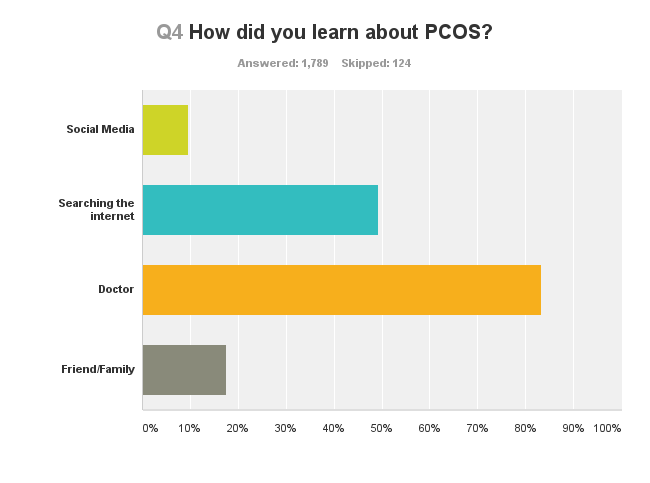
PCOS sufferers from around the world participated in the survey whether they had a formal diagnosis or not. Their main concern, it seemed, was to raise awareness and to tell the world how emotionally and physically crippling it can be. The survey showed the majority of women who responded were not diagnosed until they visited their doctor for abnormal periods and repeated failed attempts to conceive or carry to term.
It was important to understand the most common ways women had been diagnosed with PCOS. The majority of responses stated they were diagnosed through doctors such as general practitioners, fertility specialists, endocrinologists and gynecologists. Surprisingly there was a large amount of those which had to do the research themselves and ask to be tested.
Newcastle, Central Coast & Sydney Australia PCOS CYSTERS member Rachel Holton said her symptoms started when she was 15 but she did not get tested for it until 25 after a friend was diagnosed.
“A friend had it as well and said ‘I think you’ve got PCOS’, I did some research on it myself and said, yup, sounds like me,” she said. In a way she said she was lucky because she did not have to fight for a diagnosis. Because she had all the symptoms associated with PCOS, Rachel said when she went to see the doctor there was no denying it.
“Previously I would have said infertility, but then I was by some miracle able to fall pregnant twice,” Rachel said when asked what the worst symptom was. “I only fell pregnant because I worked really hard to lose a lot of weight.”
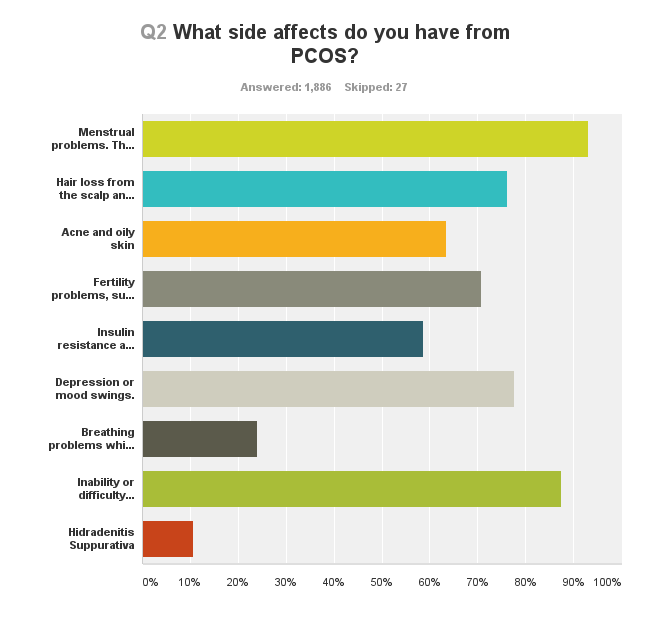
Results from our survey showed the majority faced menstrual problems and an inability or difficulty to lose weight. These were closely followed by links to depression or mood swings, and male pattern hair loss or growth. There were a few responses which involved the emergency room at a hospital.
One lady stated that 12 years ago due to massive pain she was taken to the emergency room where the staff told her “you’re just getting your period, you’ll be fine”. However, after three weeks of pain her mother took her back and demanded they test her. The tests showed a cyst on a fallopian tube which had to be removed. She has had problems with such cysts ever since. It wasn’t until she went to an endocrinologist years later where she was finally diagnosed with PCOS.
Another was taken to the emergency room in what she described as excruciating pain where the doctor told her she probably had an STI. At her follow-up visit at the gynaecologist, it was discovered there had been a cyst the size of softball that had ruptured, resulting in her PCOS diagnosis.
Important things to know
It is important for us to know and understand what is going on with our bodies. With PCOS the best thing we can do for ourselves is to get tested and diagnosed as early as possible. By doing so it is easier to make the lifestyle changes necessary to effectively manage the symptoms.
If you suspect you or someone you know has PCOS, the women of the survey encourage you to speak with your doctor and ask to be tested. If they refuse find someone else. Your doctor should conduct multiple tests and exams as just one may not show you have the syndrome.
“I believe every female should be screened.”
When I was tested, I underwent two different ultrasounds together with a few blood tests to check my hormone levels. It was not until I met with my Gynaecologist that I received a glucose tolerance and insulin level test to find out I was in fact insulin resistant. This means I am also at risk for Diabetes and must take steps to ensure my diet and lifestyle change to prevent it from happening.
Nutritionist and Health Coach Amy Medling took her understanding of PCOS symptoms and developed a range of seasonal meal plans. She has been able to help not only herself but thousands of other women effectively manage their symptoms and in many cases not only lose weight but finally conceive a child. Her Facebook page is the largest and most informative resource I have come across with over 75,000 women engaging with it.
A symptom called ‘Hidradenitis Suppurativa’, presents itself as painful, deep-seated lesions and draining sinus tracts in areas where there is skin on skin contact such as the arm pits, inner thigh region and breasts. These sores tend to heal slowly if at all and can lead to linked pores; I had one that remained open for over three months. Thanks to the PCOS diagnosis I was able to link the reactions my body had with processed sugars and flours to the flare ups I experienced and the severity of my menstrual cycles.
As PCOS sufferers we have learned how important it is to not judge a person based on their appearance. Many women indicated that because of the symptoms they have faced ridicule and judgement because of things such as weight and hair growth. Due to the increased male hormones a condition called Hirsutism results in excessive growth of facial or body hair on women.
“I won’t leave the house without make-up on, without foundation. I don’t think it actually works, but it makes me feel better that I’m trying to cover it up.”
Rachel said now since she has had her two children the hair growth is now the worst symptom she faces. She experiences thick course hair growth all over her body but feels the facial hair is the worst because everyone can see it. To manage the hair she has to pluck or wax regularly and apply make-up to cover it up.
There were a number of things women living with PCOS had wished they had known when their bodies began puberty. Many responses had to do with the health risks, what is normal and what is not with menstrual cycles, how to manage the symptoms and what options there are out there to keep things under control so hopefully you do not need to go onto medications.
It is important to know heavy, long and missed periods are not normal no matter what your doctor may say. Once your cycles begin it is recommended you keep a record of the length and severity of the periods in case you need to see a doctor. Large clots, heavy bleeding, and high amounts of pain are just some symptoms which are indicators of something being wrong. You can easily keep track of all of these things through apps on your phone.
“I would tell people that, while things can be tough and discouraging at times, that doesn’t mean you can’t achieve great things in your life.”
One survey response encourages you to be aware of all things when it comes to changes to your body. She encourages you to never let someone convince you nothing is wrong and to not be afraid to talk openly about your concerns. “No one knows your body better than you do,” she said.
“If something doesn’t seem right, even if you have deemed it normal for yourself, always see a doctor, no matter how embarrassing it may seem,” another advised.
PCOS sufferers want you to know…
- They understand
- Never lose hope
- You are not alone
- It is real and it is not your fault
- You are a whole woman no matter what
- You will be okay, this is manageable. Do not let it overwhelm you
- PCOS can have embarrassing side effects, but stay positive and seek medical attention when necessary.
There are lots of resources out there for women with PCOS whether you just want to manage the symptoms or are trying to have a baby. Many of the responses agreed that your doctor should be the first place you go to for information; however as we all know they do not always have all the information.
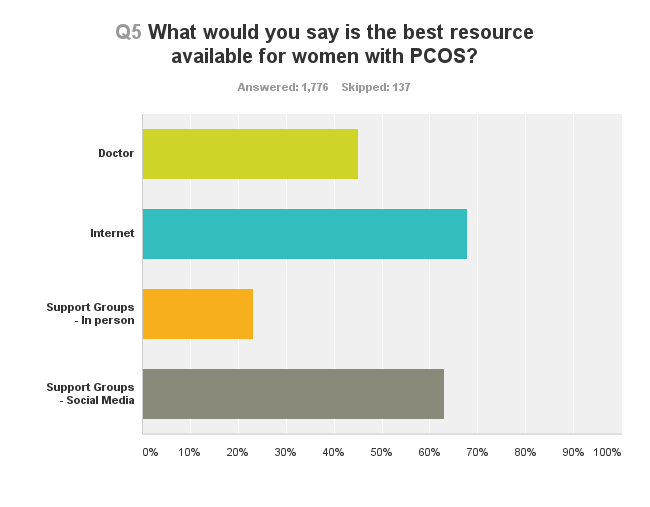
Since it can be difficult sifting through all of the resources available here are the top resources suggested by the women who participated in the survey. Our hope is through these resources you will be able to find the best ways to manage PCOS symptoms for your body.
PCOS resources
- PCOSdiva.com – Nutritionist and Health Coach Amy Medling
- PCOSdietsupport.com
- 1-in-10.org
- Soulcysters.net
- Lara Briden – Naturopathic Doctor
- Fiona McCulloch – Naturopathic Doctor based in Toronto, Canada
- Natasha Turner – Naturopathic Doctor based in Toronto, Canada
- A Patient’s Guide to PCOS
- PCOS Diet Hand Book by Collette Harris
- PCOS Diet Cookbook by Nadir Farid and Norene Gilletz
- Taking Charge of Your Fertility
- Wheat Belly
- Paleo for Women – Stefani Ruper
References
Cheema, Birinder S.; Vizza, Lisa; Swaraj, Soji,(2014), Progressive Resistance Training in Polycystic Ovary Syndrome: Can Pumping Iron Improve Clinical Outcomes? Sports Medicine, volume 44 number 7, Springer International Publishing. Provided by Lisa Vizza but available through https://link.springer.com/article/10.1007/s40279-014-0206-6
PCOS, retrieved fromhttps://www.jeanhailes.org.au/health-a-z/polycystic-ovary-syndrome
Polycystic ovary syndrome: All you need to know, retrieved from https://www.jeanhailes.org.au/resources/pcos-booklet-for-first-nations-women.
Polycystic ovary syndrome (PCOS), fact sheet, retrieved from http://womenshealth.gov/publications/our-publications/fact-sheet/polycystic-ovary-syndrome.html
Polycystic ovarian syndrome (PCOS), retrieved from https://wheq.org.au/.
What is polycystic ovary syndrome (PCOS)?, retrieved from https://www.medicalnewstoday.com/articles/265309
Professor Helena Teede, Women’s Public Health Research Program, retrieved from https://www.monash.edu/medicine/mchri.